

Musical instruments are highly sensitive to their surroundings, which is the exact same reason why performing steam cleaning of furniture and carpets (تنظيف المجالس والسجاد بالبخار) are vital. Whether it is a grand piano in a recording studio, a vintage violin in a practice room, or expensive microphones in a production booth, environmental conditions can significantly influence performance, durability, and sound quality.
Steam cleaning furniture and carpets plays a surprisingly important role in maintaining healthier studio environments. Upholstered seating, rugs, carpets, and fabric-covered surfaces naturally collect dust, allergens, moisture, and microscopic debris over time. These particles do not simply remain trapped in fabric, they circulate through the air and eventually settle on musical instruments and audio equipment.
By helping remove deep-seated contaminants without excessive chemical use, steam cleaning contributes to cleaner air, better equipment protection, and more stable environments for musicians and studios alike.
Why Musical Instruments are Sensitive to Indoor Conditions?
Most musical instruments are constructed from delicate materials such as wood, metal, felt, fabric, and sensitive electronic components. These materials react continuously to environmental conditions inside homes, rehearsal rooms, and studios.
Over time, contaminants can affect instruments in several ways. Dust may settle inside piano mechanisms, clog microphone grills, or coat amplifier vents. Excess moisture trapped in carpets and furniture can contribute to mold growth, which may damage wooden instruments and create unhealthy air conditions.
For string instruments such as guitars and violins, poor air quality may accelerate wear on finishes and hardware. Electronic studio equipment is also vulnerable, as dust buildup can interfere with cooling systems and internal circuitry.
Maintaining a cleaner indoor environment therefore becomes part of long-term instrument care rather than simply a matter of appearance.
How Carpets and Furniture Collect Hidden Contaminants?
Studios and music rooms often contain multiple soft surfaces that absorb contaminants over time. Carpets, upholstered chairs, acoustic panels, and couches act like filters, trapping particles deep within their fibers. Even in rooms that appear visually clean, hidden contaminants may include:
- Fine dust from outdoor air
- Skin particles and allergens
- Pet hair and dander
- Moisture trapped beneath carpets
- Bacteria and mold spores
- Residue from food, drinks, or foot traffic
Whenever people walk through the room or sit on upholstered furniture, some of these particles become airborne again. This process allows contaminants to circulate around instruments and recording equipment repeatedly.
For musicians spending long hours in enclosed studios, this can also affect comfort and respiratory health. Singers, wind instrument players, and recording artists in particular benefit from cleaner air environments that reduce irritation and airborne allergens.
Benefits of Steam Cleaning in Music Spaces
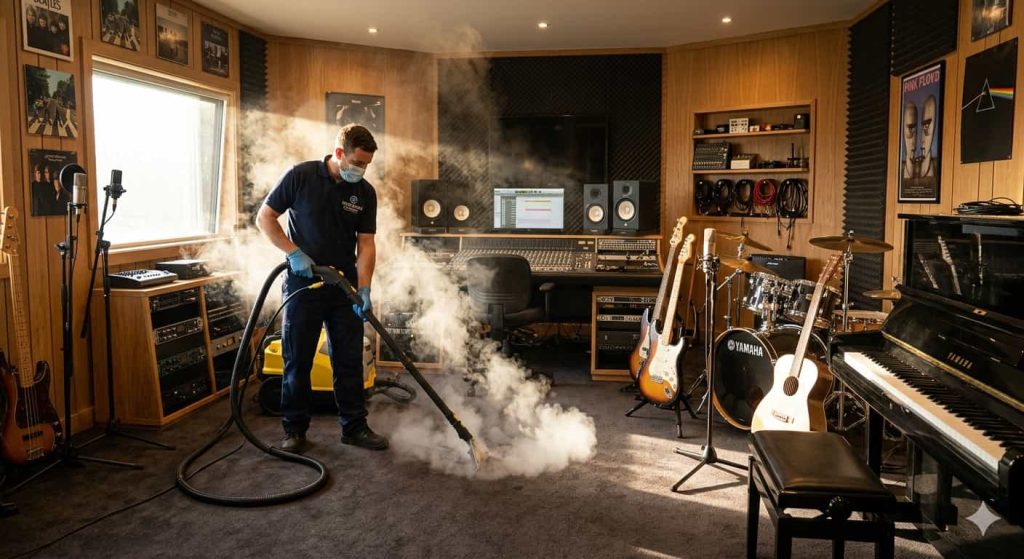
Steam cleaning offers a deeper sanitation method compared to standard vacuuming or surface wiping. By using high-temperature steam, the process helps loosen dirt, kill bacteria, and remove embedded contaminants from carpets and upholstered furniture.
One major advantage is that steam cleaning minimizes reliance on harsh chemicals. This is especially valuable in music studios where strong chemical odors or residues may interfere with sensitive equipment or create uncomfortable working conditions. Steam cleaning can benefit studios and music artists in a number of ways such as removing deeply embedded dust and allergens, reducing bacteria and mold growth, neutralizing odors trapped in fabrics, improving indoor air quality, and restoring freshness to studio furniture and carpets.
Because the process reaches beneath surface layers, it reduces the amount of airborne debris circulating through the room after cleaning. This creates a more stable and controlled environment for instruments and electronics. For studios with expensive recording gear, maintaining cleaner surroundings can also help reduce maintenance frequency and equipment cleaning costs over time.
Cleaner Studios Support Better Sound Environments
Cleanliness is not only about hygiene, it can also influence the functionality of creative spaces. Recording studios rely heavily on controlled acoustic environments, and excessive dust or poorly maintained carpets can gradually affect room quality and equipment performance.
Dust accumulation on microphones and sound equipment may subtly impact audio clarity. Poor air quality can also make long recording sessions uncomfortable for performers and engineers.
For home studios, steam cleaning can help maintain a balanced environment where instruments, furniture, and recording equipment coexist more safely and efficiently.
Preventive Maintenance for Creative Investments
Musical instruments are often valuable financial and emotional investments. Professional pianos, vintage guitars, studio monitors, and recording consoles can cost thousands of dollars and require careful maintenance to preserve performance quality.
Steam cleaning contributes to preventive care by reducing the environmental contaminants that slowly degrade equipment and indoor conditions over time.
Steam Cleaning is a Smart Investment
Steam cleaning furniture and carpets may not seem directly connected to musical instrument care, but the relationship is stronger than many musicians realize. Carpets and upholstered surfaces trap contaminants that eventually circulate through the air and settle on instruments and studio equipment.
By removing embedded dust, allergens, bacteria, and moisture, steam cleaning helps create cleaner, healthier environments that support instrument longevity and studio performance. In modern music spaces, a fresh studio environment ultimately supports clearer audio, healthier air, and better long-term care for valuable instruments and equipment.